Oracle Cited 'Force Majeure' on a $165 Billion Data Center. Is the AI Buildout Bumping Against Physical Limits?
Oracle moved to shield itself from delay costs on a flagship New Mexico project even as the largest cloud operators keep raising their spending plans, reopening the market's argument over whether the real constraint on AI computing is money or megawatts.
By Bellwize Staff · September 24, 2026, 11:24 AM ET
Bellwize Analysis weighs the public evidence around a market question. It is general information — not a forecast, and not investment advice.
Oracle sent a force majeure notice on Thursday to the developer of Project Jupiter, its planned New Mexico data center for the Stargate computing effort tied to OpenAI, according to Bloomberg. The notice does one narrow thing: it lets Oracle defer payments if the campus fails to open on schedule in 2028. Oracle is not abandoning the site. Its shares still slid about 4% in early trading.
The move landed on the trade the market has leaned on all year. Spending on artificial-intelligence computing sits underneath much of the S&P 500’s advance, and the assumption baked into it is that the money converts into working capacity on something close to schedule. A flagship project’s anchor tenant reaching for legal cover against delay pokes at that assumption. So the question the tape asked on Thursday was blunt. When a data center this size hedges its own timeline, is the binding constraint on AI still capital, or has it become steel, permits and power?
The wait for power now runs in years
Start with the site itself. Project Jupiter would draw as much as 2.45 gigawatts, fed by on-site natural-gas power, and that gas has to arrive by pipeline. The pipeline has stalled. New Mexico Land Commissioner Stephanie Garcia Richard twice denied rights-of-way for a short stretch of the proposed Green Chili Lateral, first in March and again in July, citing emissions and water concerns. The developer has since rerouted the line and pushed back its start. One 17-mile pipeline, one contested section of state land, and a project that could cost up to $165 billion waits on the outcome.
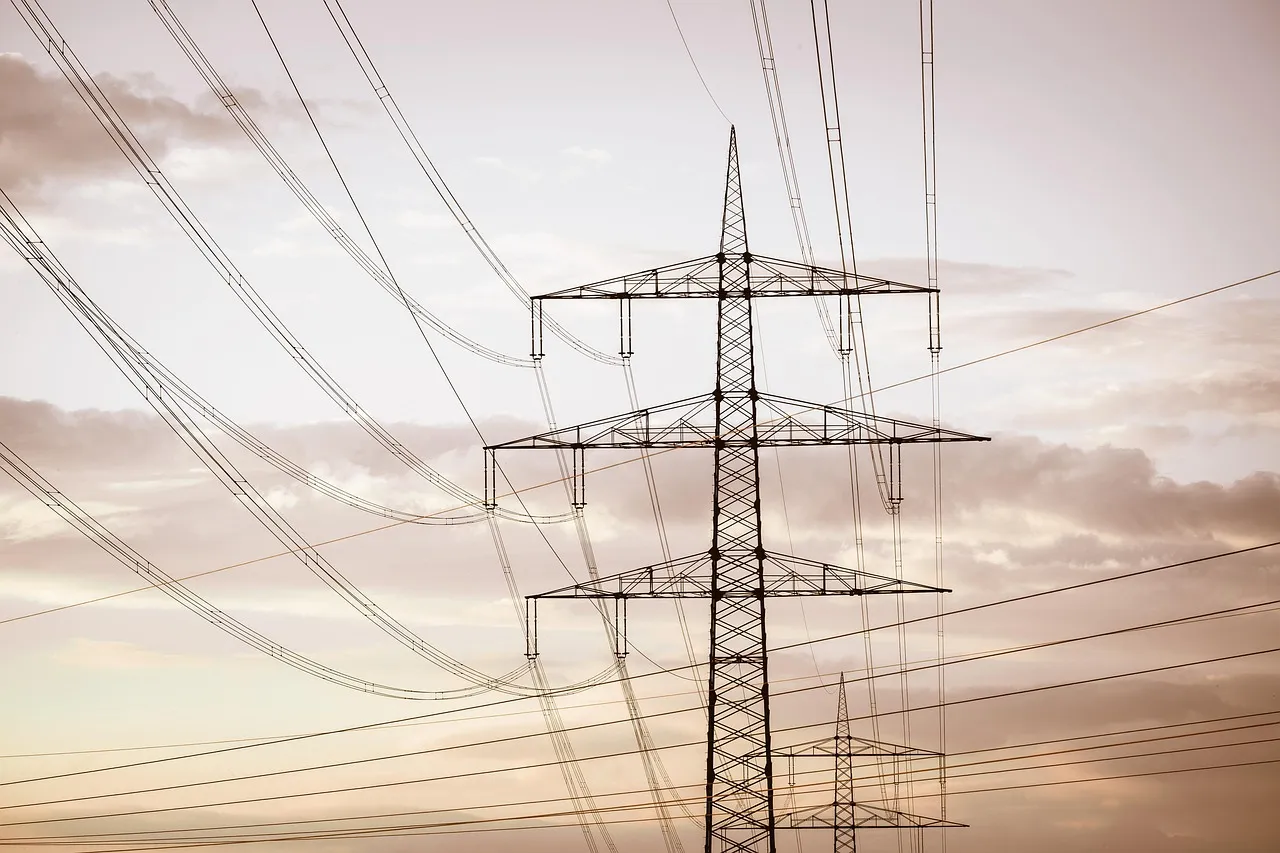
The pattern reaches well beyond New Mexico. Across the country, the scarce input in AI construction is no longer chips or money but the grid connection to run them. Substation transformer lead times have stretched to about 160 weeks, up from roughly 140 in 2023, according to Wood Mackenzie. Interconnection queues in major markets now run four to seven years, per Lawrence Berkeley National Laboratory data cited in the Department of Energy’s draft transmission study. A signed lease and a funded budget do not move those timelines. Physical construction and regulators do.
The capex guidance only goes up
Set against that, the spending shows no sign of flinching. The four largest U.S. cloud operators, Alphabet, Amazon, Microsoft and Meta, are on track to commit on the order of $700 billion to capital projects in 2026, well above 2025’s record. Amazon lifted its own 2026 figure toward $220 billion, with its finance chief attributing the increase to the higher cost of memory and leaving the underlying build plan intact. Meta widened its range higher as well. Companies staring at a hard capacity wall do not usually raise the budget.
Oracle and its developer made the same case in plainer words. “Project Jupiter remains on our planned schedule,” Oracle said, calling itself fully committed to New Mexico. Blue Owl Capital, whose unit is building the campus, said the notice “does not change the financial commitments to this multi-year project.” Read that way, it is ordinary contract housekeeping on a project with a known permitting fight. And where power is the choke point, capital is chasing it directly. Microsoft’s multiyear framework with Brookfield, signed to deliver more than 10 gigawatts of clean power through 2030, was the largest corporate energy purchase on record when it was struck.
What the data shows
Oracle closed Wednesday worth about $415 billion, so a 4% move on Thursday’s report trimmed something like $17 billion from that value in a single morning. The broad market went into the news steady. The S&P 500 eased 0.5% to 7,670 on Wednesday and the Nasdaq slipped 0.7%, with technology in the red and the volatility gauge near 16. The 10-year Treasury yield sat close to 4.96%. That last figure carries weight here. These campuses are financed, increasingly with borrowed money, and a borrowing cost near 5% turns every quarter of slippage into a real carrying charge against a payoff that does not arrive until 2028 or later.
What would settle it
The next test sits on the calendar. The largest cloud operators report September-quarter results over the coming weeks, and their capital-spending guidance will show whether the pace holds or bends. Oracle’s own next quarterly update, due in December, carries its remaining performance obligations, the contracted backlog that has powered its stock, alongside any revised language on Project Jupiter’s timing. On the site, two dates stand out: the rerouted gas pipeline’s new start, and the 2028 target for the campus to energize. Meet those, and Thursday’s notice reads as a formality. Miss them, and the megawatt bottleneck stops being a forecast.
This is a general-market summary for information only — not investment advice, and not a recommendation regarding any security.
Filed under: analysis · artificial-intelligence · data-centers · infrastructure · energy