T-Mobile Falls 13% as a SpaceX Spectrum Deal Jolts the Carriers
T-Mobile, Verizon and AT&T all dropped about 10% or more on Friday after SpaceX agreed to buy nationwide mobile spectrum, raising the prospect of a satellite rival for phone customers.
By Bellwize Staff · October 12, 2026, 9:28 AM ET
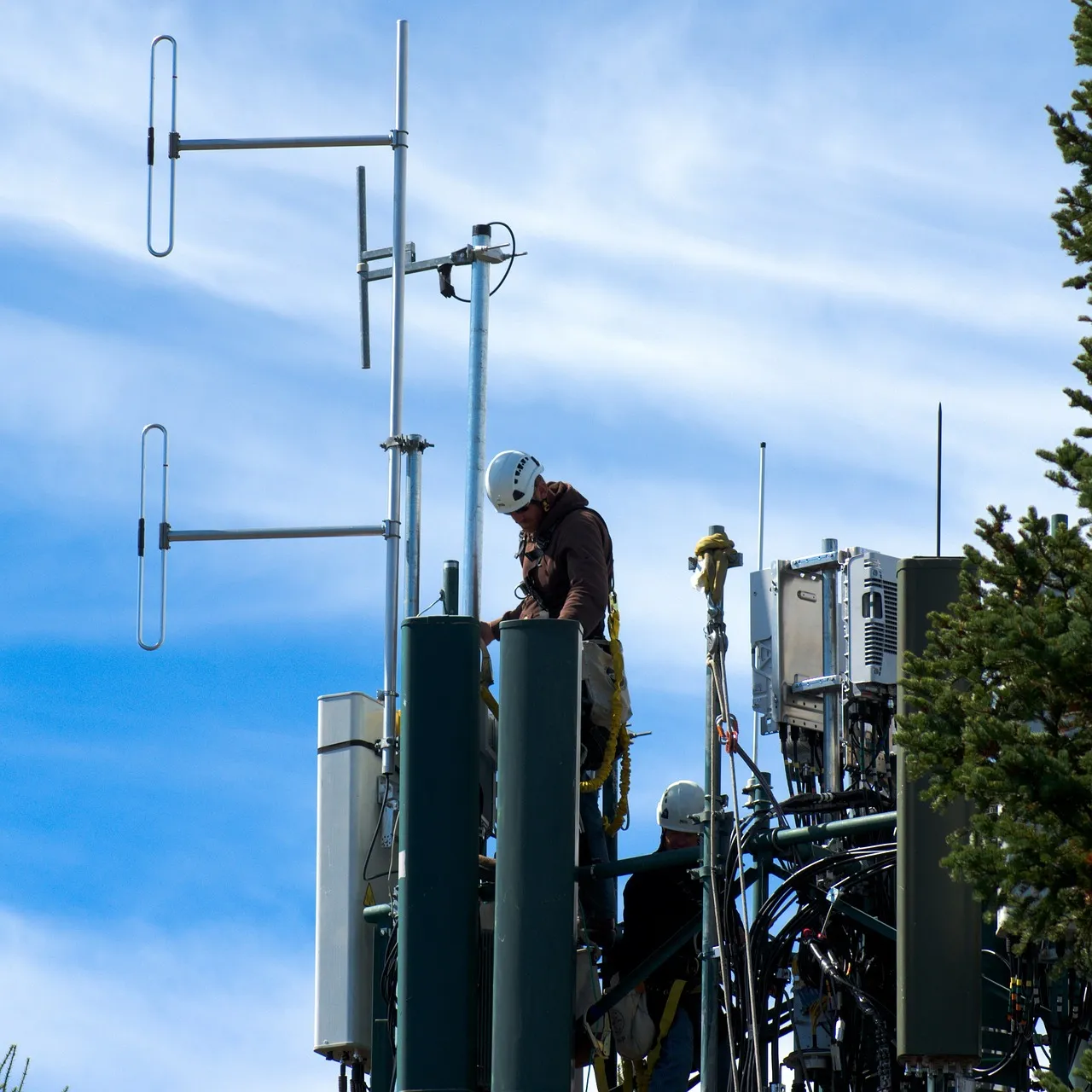
T-Mobile had its worst day in years on Friday, dropping 13.3% to $148.58 after SpaceX agreed to buy a nationwide block of mobile spectrum, a step that could turn its Starlink satellite service into a direct rival to the national carriers. Verizon lost 10.1%. AT&T lost 10.8%. The selling spread across the Atlantic to Europe’s biggest operators the same day.
What SpaceX actually bought
SpaceX said Thursday it had agreed to acquire 14 megahertz of paired 800 MHz spectrum from the private investment firm Grain Management. That is low-band spectrum, the kind of signal that reaches phones indoors and travels through walls. SpaceX described it as the coverage layer its Starlink Mobile service has been missing, and said the airwaves would let Starlink become the first operator to deploy both satellite and terrestrial spectrum. Financial terms were not disclosed. The Wall Street Journal, citing people familiar with the matter, reported the price at about $8 billion. The purchase still needs clearance from the Federal Communications Commission, and it arrived a day after the FCC approved SpaceX’s plan for 15,000 direct-to-device satellites.
The spectrum has a short history with T-Mobile itself. Grain acquired the same 800 MHz block from T-Mobile in a sale that closed in August, valued at $2.9 billion in cash plus other licenses. Months later it is heading to SpaceX.
The fear is a fourth national network
For a while, Starlink’s tie-up with T-Mobile looked like a complement. The satellites filled dead zones where no tower reaches, and T-Mobile marketed the result as its T-Satellite feature. A low-band spectrum purchase points somewhere different: toward a network that could sell phone service on its own terms. Investors read Friday’s news as the arrival of a new competitor for the monthly phone bill, and T-Mobile sits in the most uncomfortable spot of the three, because its own customers lean on that Starlink connection.
Not every desk saw an imminent threat. Morgan Stanley told clients the deal mainly signals that SpaceX intends to keep buying spectrum aggressively, and that real pressure on the carriers would build slowly, beginning in rural markets. The same note called the news better for the companies that own cell towers, whose shares rose on Friday as investors bet on steadier demand for ground-based equipment.
A deep cut on heavy volume
The size of the move set it apart. Trading volume ran 3.7 times T-Mobile’s 20-day average. Friday’s close of $148.58 landed below the floor of its prior 90-day range, leaving the stock down 16.1% over the past month and 24% under its 90-day high of $195.64. Verizon and AT&T told much the same story, each off about 10% on the session. This was a sector event, not a single-company stumble.
European carriers followed. Reuters reported Deutsche Telekom, Vodafone, Telefonica and Orange all lower, with the regional telecom index sliding to its weakest level since late January. SpaceX, which is privately held and does not trade publicly, was reported to have risen in the few venues that track it.
On the calendar
Two markers frame what comes next. The spectrum sale has to pass FCC review, and that process will decide how soon, or whether, SpaceX can put the airwaves to use. Before any ruling, T-Mobile reports third-quarter results on October 28, with the earnings release due near 4:05 p.m. Eastern and the call to follow at 4:30.
This is a general-market summary for information only — not investment advice, and not a recommendation regarding any security.
Filed under: stocks · tmus · telecom