Micron Has Quadrupled Its Revenue in a Year. Is the Memory Boom Structural or Cyclical?
Micron's sales have quadrupled and its stock has run close to sevenfold on AI memory demand, and the market is split on whether tight supply marks a lasting shift or the top of the oldest boom-bust cycle in chips.
By Bellwize Staff · August 21, 2026, 11:25 AM ET
Bellwize Analysis weighs the public evidence around a market question. It is general information — not a forecast, and not investment advice.
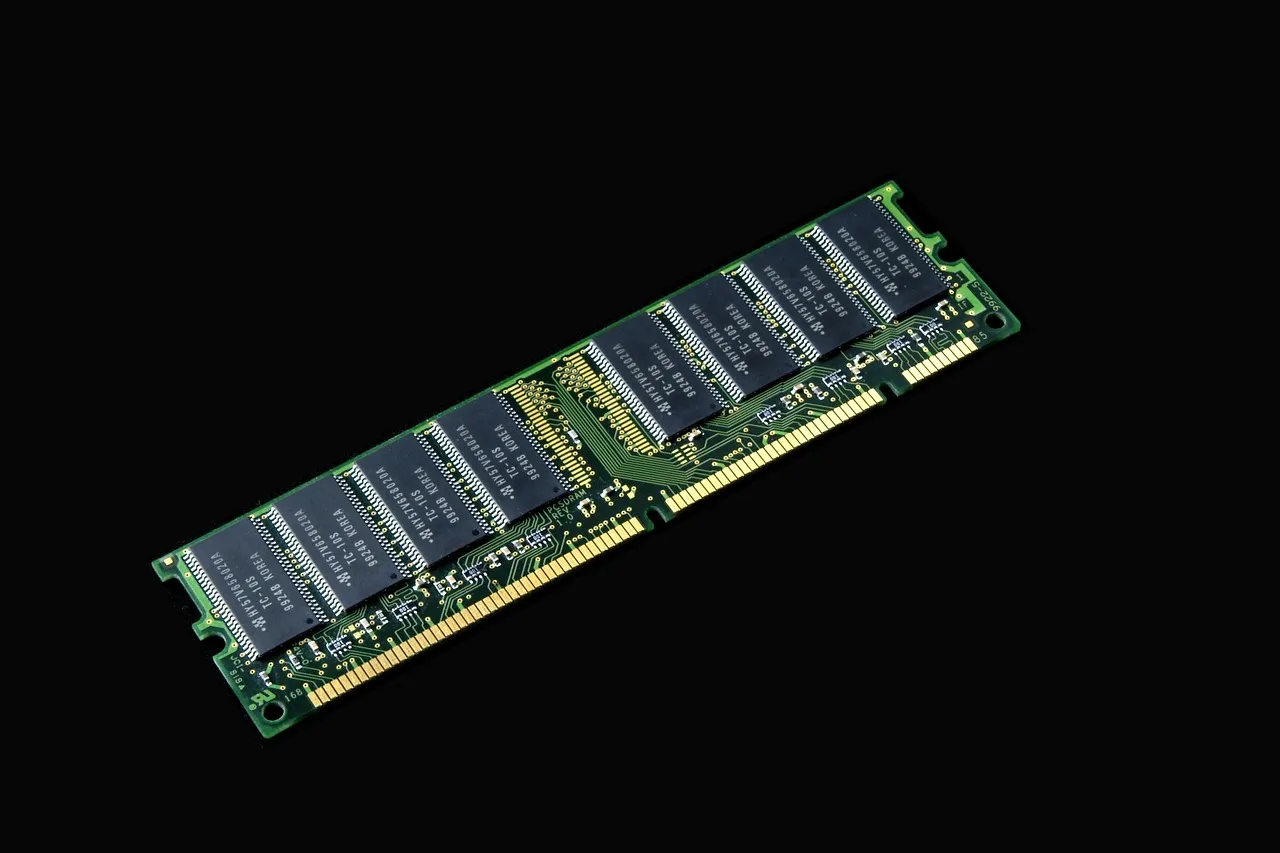
Micron reports its fiscal fourth quarter next month, and the argument about the stock is already loud. Its shares have climbed close to sevenfold over the past year, touched $1,255 in June, then fell to $739 by late July before recovering to around $974. Revenue in the quarter it reported in June came to $41.46 billion, more than four times the $9.30 billion it booked in the same period a year earlier. The company sells memory chips, a business that has boomed and busted for forty years. The pattern is old. The question dividing the market is whether this boom is the same animal or a new one: a lasting shift in memory pricing driven by AI, or the familiar top of a cycle that always turns.
Sold out through 2026, with revenue to match
The strongest case for something durable is that the demand is already contracted. Micron has said it committed its entire calendar-2026 supply of high-bandwidth memory, the specialized chips that sit beside AI accelerators, on both price and volume. Its newest version, HBM4, is in high-volume shipments to its lead customer. That is not a forecast. It is booked business, and it shows in the financials: the June quarter’s $41.46 billion in revenue arrived with GAAP earnings of $24.67 a share, against a loss-prone history that makes those numbers look like a different company.
The supply side reinforces it. Three firms make almost all of the world’s DRAM, and the same three are the only suppliers of high-bandwidth memory, an oligopoly with little reason to flood the market. The research firm TrendForce estimates that added spending this year will do little to lift bit supply, because new plants from the Korean makers will not ramp before the second half of 2027 and Micron’s next U.S. fab is not expected to produce before then either. Tight supply, contracted demand, an industry that has learned discipline. Micron projects the market for high-bandwidth memory grows from about $35 billion in 2025 to $100 billion by 2028. Morgan Stanley, after the summer selloff, told clients the drop was a chance to buy.
A 700% run into a July bear market
The case for caution begins with that same chart. A gain approaching 700% in a year prices in a great deal of good news, and the July reversal showed how fast sentiment can swing. Micron, Samsung and SK Hynix all fell more than 20% from their highs that month; by one tally global chip stocks shed some $3.3 trillion in market value in a matter of weeks. Memory has done this before. Prices spike when supply is short, the high prices pull in new capacity, and the new capacity eventually breaks the price. That pattern has repeated for decades.
The capacity is already funded. SK Hynix is set to spend $20.5 billion this year and Samsung $20 billion, both raising outlays to expand memory production, and Micron is lifting its own capital budget toward $13.5 billion. The plants those dollars buy are the classic mechanism that ends a memory boom, and they begin arriving in 2027. There is a valuation wrinkle too. Micron’s forward price-to-earnings ratio sits near 10, which looks cheap until you remember that a low multiple on a cyclical stock often signals peak earnings rather than a bargain, because the market is pricing in the decline to come.
What the data shows
The market is treating Micron as a winner again for now. The shares closed at $974.33 on Thursday, up 3.97% on the day, having clawed back most of the ground lost in July. That round trip is the tension in one line: a stock that ran to $1,255, fell to $739, and returned to within a fifth of its high, all in ten weeks. Analysts remain broadly positive, with price targets that cluster well above the current level and at least one Buy call at $1,250. The wider tape is calm this week. The S&P 500 sits at 7,674, the Nasdaq at 26,155, and the volatility index at 15, low by the standards of the summer.
What would settle it
A few scheduled events will test each side. Micron reports fiscal fourth-quarter results in late September; the market will read its guidance for the following quarters, and any commentary on 2027 pricing, as the clearest sign of whether the strength holds past the contracted year. Nvidia reports on August 26. Its data-center demand is the biggest single pull on high-bandwidth memory, so a soft or strong number there feeds straight into the memory thesis. Later this year the industry negotiates its 2027 supply contracts, and the prices struck will show whether buyers still expect scarcity. Through 2027 the new fabs from Samsung, SK Hynix and Micron are scheduled to come online. If demand is still running ahead of them when they arrive, the structural case gains ground. If the extra chips land into softer demand, the cycle will have the last word. For now, the same numbers argue both ways.
This is a general-market summary for information only — not investment advice, and not a recommendation regarding any security.
Filed under: analysis · semiconductors · memory · ai-infrastructure · micron